
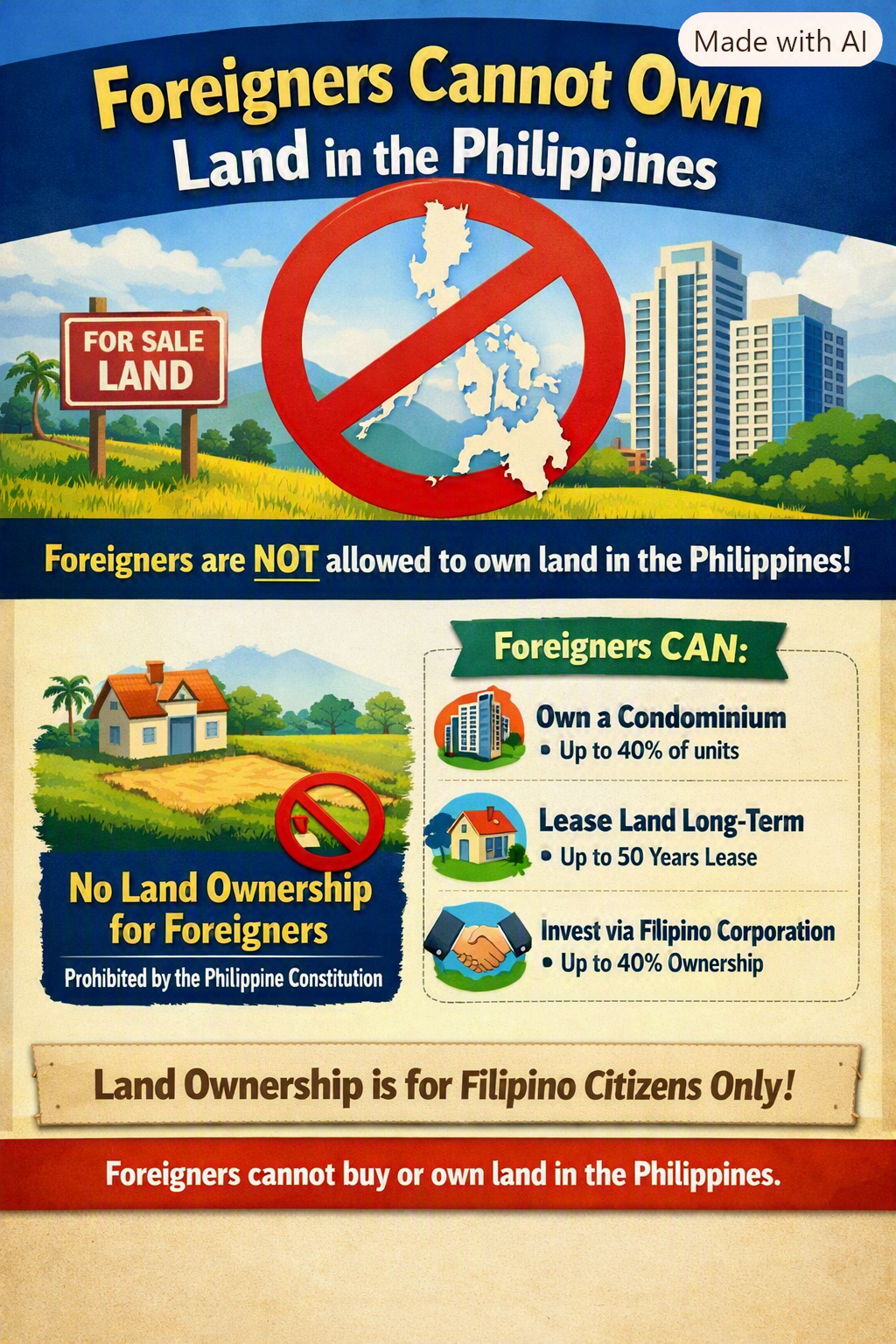
Foreigners cannot directly own land in the Philippines — that’s the key rule. However, there are legal ways to hold property interests depending on the type of asset:
| Type of Property | Allowed? | Notes |
|---|---|---|
| Land | ❌ No | The Philippine Constitution prohibits foreign land ownership. Only Filipino citizens or corporations with at least 60% Filipino ownership can own land. |
| Condominium Units | ✅ Yes | Foreigners can own up to 40% of the total units in a condominium project. The building must be owned by a Filipino-majority corporation. |
| Buildings (not land) | ✅ Yes | You can own the structure itself, but not the land underneath. Usually done via long-term lease. |
| Long-Term Lease | ✅ Yes | Foreigners can lease land for up to 50 years, renewable for another 25 years. Common for residential or commercial use. |
| Corporation Ownership | ✅ Conditional | You can form a corporation with Filipino partners — foreigners may own up to 40% of the shares. |
💡 Common Legal Paths
- Condominium purchase — simplest and safest route.
- Land lease — for building a home or business.
- Joint venture — with Filipino partners under a corporation.
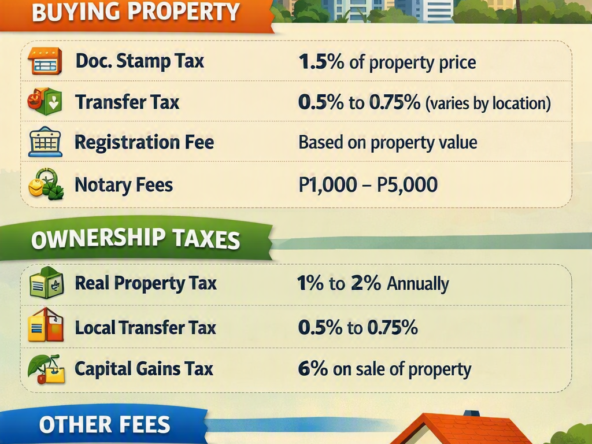
⚠️ Important Taxes and Fees
If you buy or lease property, expect:
- Documentary Stamp Tax: 1.5%
- Transfer Tax: 0.5–0.75%
- Registration Fee: based on value
- Capital Gains Tax: 6% when selling